15 Easy Yoga Poses for Beginners at Home
Starting a yoga practice does not require an expensive gym membership, complicated equipment, or years of experience. With a comfortable space and a little consistency, you can begin practicing yoga right in your own home.

Yoga combines physical postures, breathing techniques, and mindfulness. For beginners, simple poses can help develop flexibility, balance, body awareness, and relaxation.
In this guide, we explore 15 easy yoga poses that you can practice at home. Each pose includes simple instructions, beginner-friendly guidance, and potential benefits.
Why Should Beginners Start Practicing Yoga?
Yoga can be a gentle way to introduce regular movement into your daily routine. You can adjust many poses to suit your comfort level and gradually build confidence as you become more familiar with the movements.
Some potential benefits of regular yoga practice include:
- Improved flexibility and mobility.
- Better balance and body awareness.
- Development of muscular strength and endurance.
- Relaxation and stress management.
- Greater awareness of breathing and posture.
- A relaxing activity that can become part of a daily routine.
15 Easy Yoga Poses for Beginners
You do not need to master every pose immediately. Start slowly, focus on comfortable movement, and take breaks whenever needed.
In This Article
1. Mountain Pose (Tadasana)

Mountain Pose is one of the simplest standing yoga positions. It teaches beginners how to stand with awareness and develop a comfortable upright posture.
How to do it:- Stand with your feet together or comfortably apart.
- Distribute your weight evenly across both feet.
- Keep your knees relaxed rather than locked.
- Let your arms rest naturally beside your body.
- Lengthen your spine and relax your shoulders.
- Breathe slowly and comfortably for 30 seconds.
2. Child's Pose (Balasana)

Child's Pose is a gentle resting position that many beginners find comfortable. It can be used between more active movements during a yoga session.
How to do it:- Begin by kneeling on your yoga mat.
- Bring your big toes together and allow your knees to separate comfortably.
- Slowly lower your hips toward your heels.
- Extend your arms forward or rest them beside your body.
- Lower your forehead toward the mat if comfortable.
- Breathe gently and remain in the position for 30 seconds.
3. Cat-Cow Pose (Marjaryasana-Bitilasana)

Cat-Cow is a gentle movement sequence that involves slowly rounding and extending the spine. It is often included in beginner yoga warm-ups.
How to do it:- Start on your hands and knees.
- Position your wrists under your shoulders and knees under your hips.
- As you inhale, gently lift your chest and tailbone.
- As you exhale, round your back and gently tuck your chin.
- Move slowly between both positions.
- Repeat for 5 to 10 comfortable cycles.
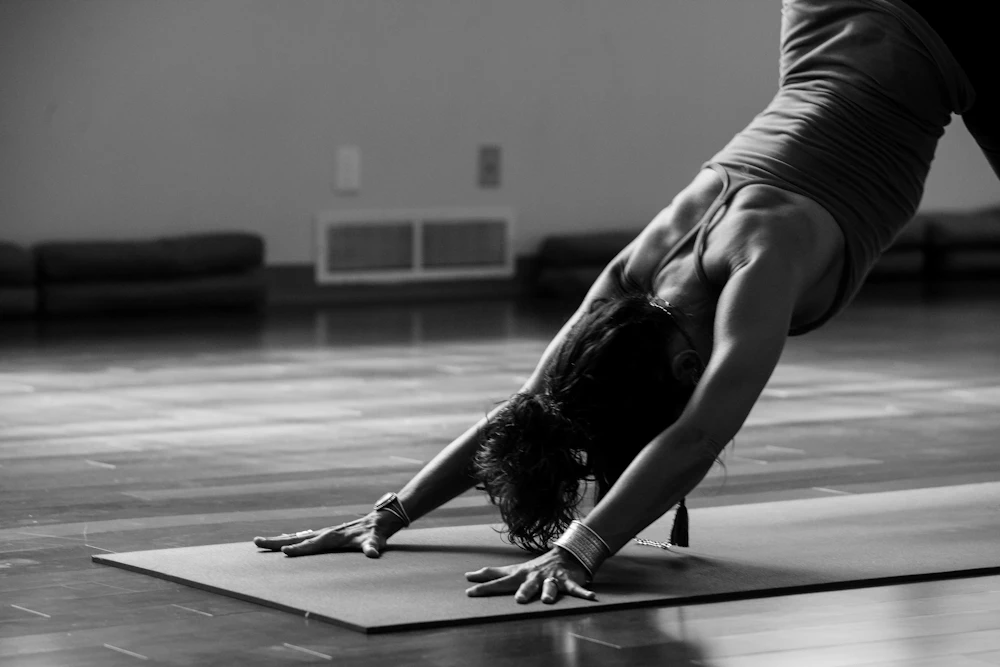
4. Downward-Facing Dog (Adho Mukha Svanasana)
Downward-Facing Dog is a familiar yoga pose that creates an inverted V shape with the body. Beginners can bend their knees to make the position more comfortable.
How to do it:- Start on your hands and knees.
- Spread your fingers and press your palms into the mat.
- Tuck your toes and slowly lift your hips upward.
- Move your chest gently toward your thighs.
- Keep your knees slightly bent if needed.
- Hold for 15 to 30 seconds while breathing naturally.
5. Tree Pose (Vrikshasana)
Tree Pose is a standing balance exercise. It helps beginners practice stability and concentration. You can keep one hand on a wall for support.
How to do it:- Stand tall with your feet together.
- Shift your weight gently onto your left foot.
- Place the sole of your right foot against your left ankle or calf.
- Avoid pressing your foot directly against your knee.
- Bring your hands together in front of your chest.
- Hold briefly and repeat on the other side.
6. Cobra Pose (Bhujangasana)

Cobra Pose is a gentle backbend that encourages movement through the chest and upper body. Beginners should avoid forcing the backbend or pushing into discomfort.
How to do it:- Lie on your stomach with your legs extended.
- Place your palms under your shoulders.
- Keep your elbows close to your body.
- Gently lift your chest using your back muscles.
- Keep your shoulders relaxed and neck comfortable.
- Hold for 10 to 20 seconds and slowly lower down.
7. Bridge Pose (Setu Bandhasana)

Bridge Pose is a beginner-friendly floor exercise that engages the glutes, legs and core while encouraging gentle movement through the front of the body.
How to do it:- Lie on your back with your knees bent.
- Place your feet flat on the mat, hip-width apart.
- Keep your arms beside your body.
- Press gently through your feet and lift your hips.
- Keep your knees pointing forward.
- Hold for 10 to 20 seconds before lowering slowly.
8. Seated Forward Bend (Paschimottanasana)
Seated Forward Bend is a stretching pose that focuses on the back of the legs and the spine. Beginners can bend their knees or use a yoga strap.
How to do it:- Sit on your mat with your legs extended forward.
- Keep your spine comfortably upright.
- Inhale and lengthen your upper body.
- Exhale and gently lean forward from your hips.
- Rest your hands on your legs, ankles or feet.
- Stay for 15 to 20 seconds without forcing the stretch.
9. Warrior I (Virabhadrasana I)
Warrior I is a standing yoga pose that engages the legs and encourages stability. It can be adjusted by shortening your stance or lowering your arms.
How to do it:- Stand with your feet apart.
- Step one foot forward and turn the back foot slightly outward.
- Bend your front knee only as far as comfortable.
- Keep your hips facing generally forward as your body allows.
- Raise your arms overhead if comfortable.
- Hold briefly and repeat on the other side.
10. Warrior II (Virabhadrasana II)
Warrior II is a standing pose that works the legs and challenges balance. It is commonly used in many beginner yoga sequences.
How to do it:- Stand with your feet wide apart.
- Turn your front foot outward and slightly turn the back foot inward.
- Bend your front knee comfortably.
- Extend both arms out to the sides at shoulder height.
- Look gently over your front hand.
- Hold for a few breaths and switch sides.
11. Butterfly Pose (Baddha Konasana)
Butterfly Pose is a seated position that gently stretches the inner thighs and hips. It is a simple option for beginners who want to explore seated stretches.
How to do it:- Sit comfortably on your mat.
- Bring the soles of your feet together.
- Hold your feet gently with your hands.
- Allow your knees to move toward the floor naturally.
- Sit tall and breathe slowly.
- Stay for 20 to 30 seconds.
12. Easy Seated Pose (Sukhasana)

Easy Seated Pose is a comfortable position often used for breathing exercises and meditation. Sitting on a folded blanket can make the pose more comfortable.
How to do it:- Sit on a yoga mat or folded blanket.
- Cross your legs comfortably.
- Rest your hands on your knees.
- Lengthen your spine without stiffening your body.
- Relax your shoulders and jaw.
- Close your eyes if comfortable and breathe naturally.
13. Triangle Pose (Trikonasana)
Triangle Pose is a standing side-body stretch that encourages balance and mobility. Beginners can use a yoga block to support the lower hand.
How to do it:- Stand with your feet wide apart.
- Turn one foot outward.
- Extend your arms to the sides.
- Reach toward your front leg and lower your hand to your shin or a block.
- Extend your other arm upward if comfortable.
- Keep your chest open and avoid forcing your neck.
- Repeat on the opposite side.
14. Legs-Up-the-Wall Pose (Viparita Karani)
Legs-Up-the-Wall Pose is a supported resting position. It can be a calming way to finish a gentle yoga session. Choose a comfortable position and avoid forcing your legs straight.
How to do it:- Sit sideways next to a clear wall.
- Slowly lie back and bring your legs up the wall.
- Adjust your hips to a comfortable distance from the wall.
- Rest your arms beside your body.
- Relax and breathe naturally for a short period.
- To finish, bend your knees and roll gently onto your side.
15. Corpse Pose (Savasana)
Savasana is a relaxation pose usually practiced at the end of a yoga session. It allows you to rest quietly and notice how your body feels after movement.
How to do it:- Lie comfortably on your back.
- Allow your legs to rest naturally apart.
- Place your arms beside your body with palms facing upward.
- Close your eyes if comfortable.
- Relax your muscles and breathe naturally.
- Rest for 3 to 5 minutes or longer if desired.
A Simple 15-Minute Yoga Routine for Beginners
If you are new to yoga, you can combine a few of the poses above into a short daily routine. The following sequence offers a gentle starting point.
Suggested Beginner Yoga Schedule
- 2 minutes: Easy Seated Pose and comfortable breathing.
- 2 minutes: Mountain Pose and gentle standing movements.
- 2 minutes: Cat-Cow Pose.
- 2 minutes: Child's Pose and Downward-Facing Dog.
- 2 minutes: Butterfly Pose.
- 2 minutes: Bridge Pose.
- 3 minutes: Corpse Pose and relaxation.
Adjust the duration to your comfort level. You can skip any pose that does not feel suitable for your body.
Beginner Yoga Tips: What to Know Before You Start
Starting a new exercise routine can feel challenging. These simple tips can help make your home yoga practice more comfortable and consistent.
- Choose a comfortable space: Find a quiet area with enough room to move safely.
- Use a yoga mat: A non-slip mat can provide better grip and cushioning.
- Wear comfortable clothing: Choose clothes that allow you to move freely.
- Start with short sessions: Even 10 to 15 minutes can be a useful starting point.
- Focus on breathing: Keep your breathing natural and avoid holding your breath.
- Do not force stretches: Yoga should not require pushing through pain.
- Practice consistently: A manageable routine is easier to maintain over time.
- Use support when needed: Yoga blocks, cushions and folded blankets can make certain positions more accessible.
Frequently Asked Questions About Beginner Yoga
1. Can I start doing yoga at home as a beginner?
Yes. Many basic yoga poses can be practiced at home with a comfortable mat and enough space. Start with simple movements and follow beginner-friendly guidance.
2. How many minutes of yoga should a beginner do daily?
Beginners can start with 10 to 15 minutes per session. Gradually increase the duration as your comfort and experience improve.
3. Is yoga suitable for people who are not flexible?
Yes. You do not need to be flexible to begin yoga. Many poses can be modified with bent knees, cushions or yoga blocks to suit your current abilities.
4. Is morning or evening better for yoga?
Both can work. Morning yoga may help you begin the day with gentle movement, while evening yoga can provide a relaxing activity after work. Choose a time that fits your schedule.
5. Do I need special equipment for home yoga?
A non-slip yoga mat is useful, but you do not need expensive equipment to begin. A folded blanket or sturdy cushion can provide additional support.
6. Can yoga help with stress?
Yoga combines movement, breathing and mindfulness, which may support relaxation and stress management. Individual experiences vary.
7. Should I practice yoga every day?
You can practice gentle yoga regularly if it feels comfortable for your body. Include rest days when needed and avoid pushing through pain or fatigue.
Final Thoughts
Yoga is a practice that can grow with you. You do not need to perform advanced poses or spend hours exercising to begin enjoying its potential benefits.
These 15 easy yoga poses provide a starting point for building a comfortable home routine. Begin with simple movements, pay attention to your breathing and progress at a pace that feels right for you.
The most important part of starting yoga is consistency, patience and listening to your body. With regular, comfortable practice, you can gradually develop a routine that supports your overall wellness.